Get your material list approved before loading. A disposal option offered by a city or another hauler does not automatically apply to your rental.
Build a material list before you book
Write down the actual contents of the project instead of using one broad label such as “junk” or “remodel.” A garage may contain ordinary clutter alongside automotive fluids, power-tool batteries, and old paint. A bathroom may contain light packaging alongside dense tile and fixtures. Those are different disposal decisions.
Describe the source of the material, too: household, contractor job, landscaping, or storm cleanup. Ask the crew to confirm which items can share a load. Approval for one material does not mean that every item from the same room belongs in the dumpster.
Use three sorting areas
Set aside a keep-or-reuse area, an approved dumpster area, and a separate area for items needing another disposal route. Label them so helpers and contractors follow the same plan. Sorting before the first load is easier than retrieving an item from a partly filled container.
| Material group | Your next step |
|---|---|
| Household clutter, wood, drywall, or light yard debris | Describe the load and confirm acceptance |
| Concrete, dirt, brick, stone, roofing, or large amounts of tile | Arrange a material-specific container and loading plan |
| Paint, liquids, chemicals, fuels, or tires | Keep out of the rental and find an appropriate collection option |
| Appliances, electronics, batteries, or unknown materials | Identify the exact item and ask before loading |
Keep the published exclusions out
Hill Country Dumpsters’ published FAQ excludes hazardous materials, liquids, paint, and tires, and notes restrictions on some appliances. Keep these separate while you arrange disposal. Ask about the exact appliance or electronic item; do not rely on a general statement that a dumpster can take household goods.
Do not empty containers of unknown liquid into the dumpster or mix products to save space. TCEQ advises keeping household chemicals labeled and in their original containers, and never mixing them together. Check the receiving program’s instructions before transporting them.
Give batteries and battery-powered devices their own route
A cordless drill, laptop, or rechargeable toy can hide a lithium-ion battery inside an otherwise ordinary-looking item. EPA advises keeping lithium-ion batteries and devices containing them out of household trash and regular recycling bins, and using a suitable battery or electronics collection program.
Ask a collection provider whether it takes the battery type and condition you have. For a damaged battery, follow the manufacturer’s guidance rather than trying to dismantle the device. A dumpster is not a battery collection point.
Pause when a building material is uncertain
If renovation work uncovers material suspected of containing asbestos, stop disturbing it and get advice from a trained, accredited asbestos professional. EPA explains that appearance alone usually cannot identify asbestos and advises against taking your own samples. Do not turn an uncertain material into an ordinary mixed-debris load.
Tell your contractor and the rental team before disposal is arranged. A regular dumpster rental does not provide testing, abatement, or approval to dispose of regulated material.
Keep approved loads ready for collection
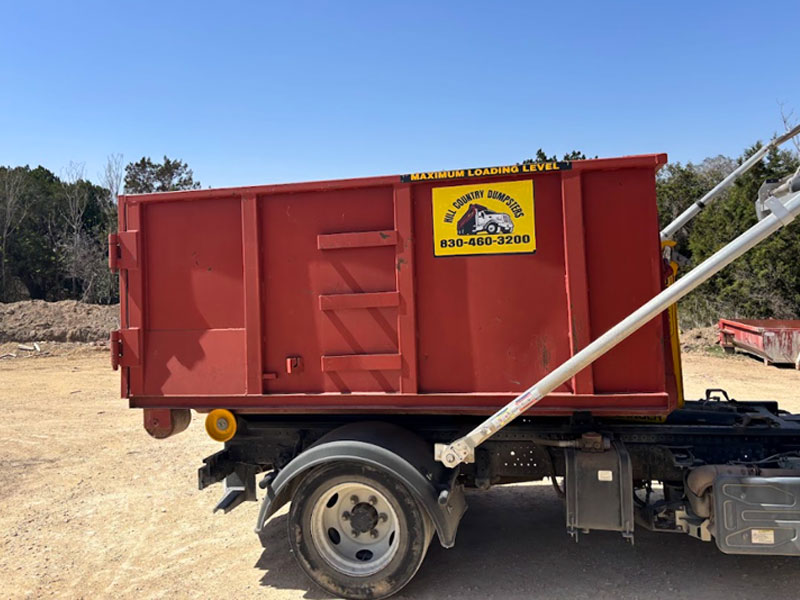
Keep material inside the container and below the applicable fill line. Heavy-debris limits can be lower than the top of the sides. Do not let long objects project out of the load or assume that a tarp will make an overfilled container ready to haul.
If the load is approaching a limit or you find an unexpected item, call before adding more. The crew can discuss the next step without turning a small question into a collection problem.
Before the first item goes in
- Review the material list with the crew
- Separate chemicals, batteries, appliances, and other special items
- Tell every helper which materials are approved
- Confirm the fill line and weight allowance for this particular load
Local programs, accepted materials, and rental terms can change. Confirm the requirements for your address, material, and rental before loading or making a disposal trip.