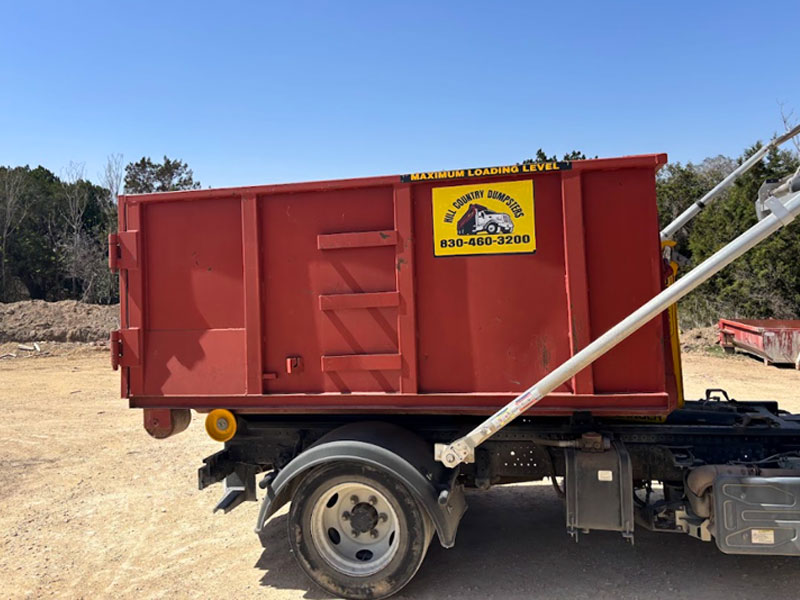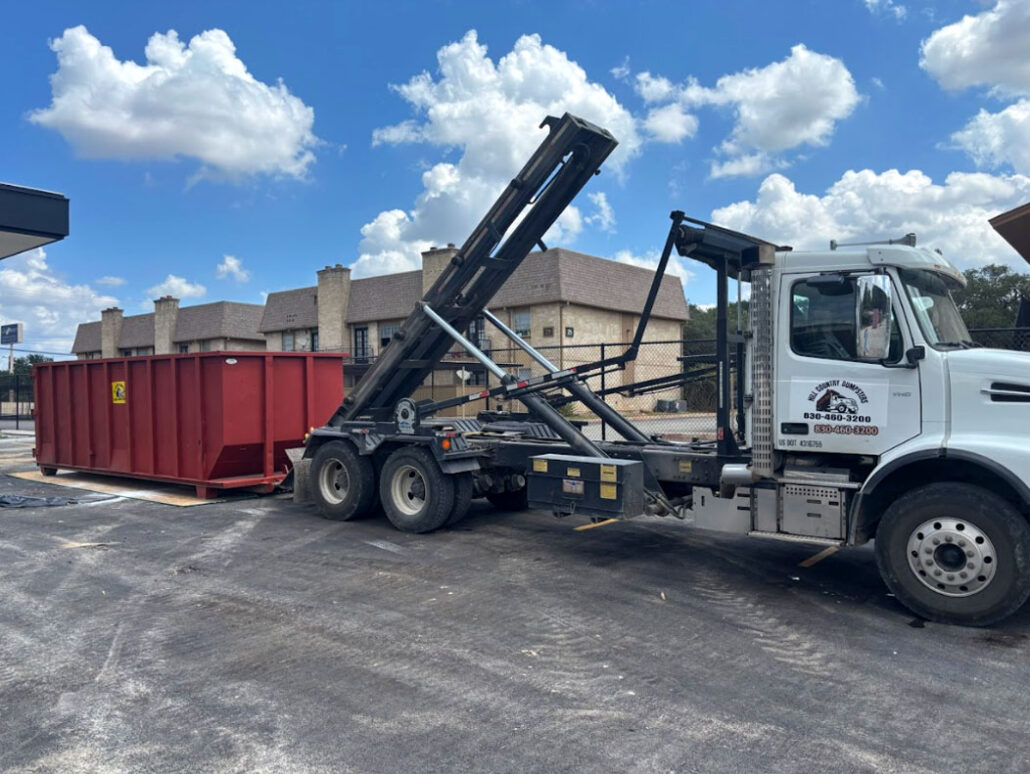
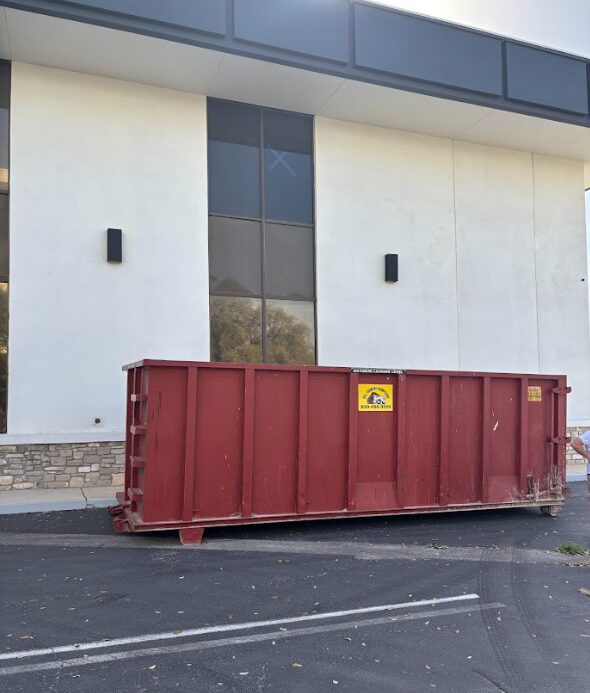
A partly filled dumpster can already be too heavy. Get the material, container, and loading limit agreed before the first heavy load goes in.
Separate the included weight from the loading limit
An included weight allowance is a pricing detail. The equipment’s safe loading limit is an operational limit. Ask about both. An overage fee does not buy permission to exceed what the container, truck, or route can handle.
The general fill line is not a universal heavy-material limit, either. A dedicated load may have a much lower permitted depth. Follow the crew’s material-specific instructions even when the dumpster still looks mostly empty.
Describe the material and how much is coming out
A broken patio, excavated soil, stone wall, and roof tear-off are different jobs. For a slab, bring its approximate length, width, and thickness. For roofing, ask your roofer for the area, material, and number of layers. For excavation, describe the soil, rock, and any other material mixed in.
As a volume example only, a 10-by-10-foot slab that is 4 inches thick occupies about 33 cubic feet, or roughly 1.2 cubic yards, before it is broken up. That arithmetic does not estimate a safe load weight: broken pieces, reinforcing material, moisture, and packing all affect the actual load.
- Identify concrete, masonry, soil, stone, tile, roofing, or mixed debris.
- Give quantities and measurements, with photos where practical.
- Mention moisture, attached material, reinforcing metal, or contamination concerns.
- Ask whether each material must stay separate.
Ask about a dedicated heavy-debris container
Hill Country Dumpsters’ published catalog includes a separate heavy-duty option for concrete, dirt, and other dense materials. Confirm current availability and whether your exact load qualifies. The standard size finder is not intended to assign heavy-debris loading limits.
Do not assume a mixed household rental can accept leftover rock or a few wheelbarrows of soil. Ask before mixing loads. Dedicated material handling may depend on keeping the load free of other debris.
Plan heavy work in manageable stages
Coordinate with the contractor about when the material will be removed and how it will reach the container. Ask the rental crew where the material can be placed within the approved load and what limit to stop at. Share those instructions with every operator and helper.
If the project exceeds one approved load, plan exchanges or separate hauls before work begins. Leave a practical place to pause removal while waiting for the next container, and keep the truck route clear of excavators, spoil piles, and materials.
Clarify the weight and pricing assumptions
Ask how weight is recorded, what the quoted price covers, and which charges apply if the load differs from the agreed material. Confirm whether extra days, additional trips, or contamination of a dedicated load change the price. Get those answers for your rental rather than using another company’s published limits.
If the quantity changes during work, update the crew before continuing. Choosing the right next haul is better than discovering a transport problem when the loaded container is ready to leave.
Check the load before requesting pickup
Compare the load with the instructions you received. Keep debris contained, do not stack above an approved level, and flag any unexpected item that entered the load. Leave access available for collection and tell the crew if rain or site work has changed ground conditions.
When there is uncertainty about the limit, stop loading and call. The remaining empty space is not a measure of remaining safe capacity.
The heavy-material booking checklist
- Material type and estimated quantity identified
- Dedicated versus mixed load agreed with the crew
- Allowed loading depth and included weight confirmed
- Contractor and helpers given the same loading instructions
- Exchange timing and collection access planned
Local programs, accepted materials, and rental terms can change. Confirm the requirements for your address, material, and rental before loading or making a disposal trip.