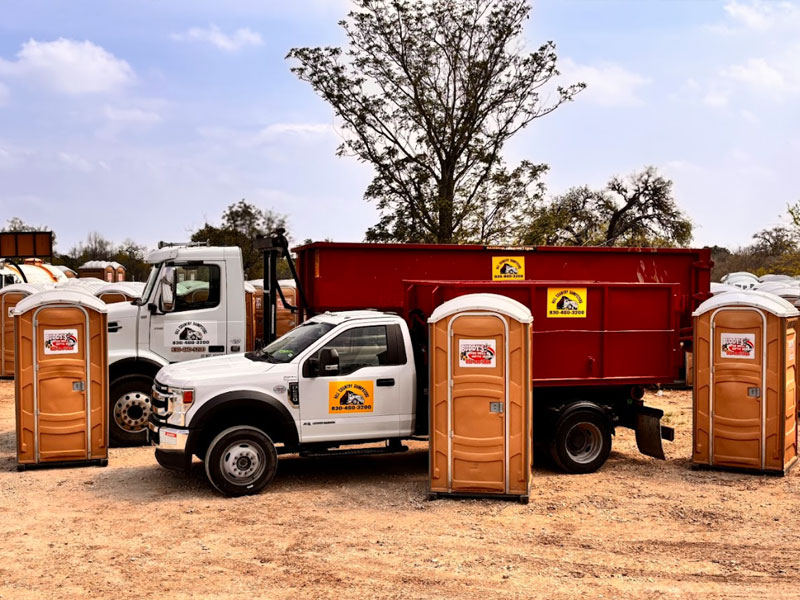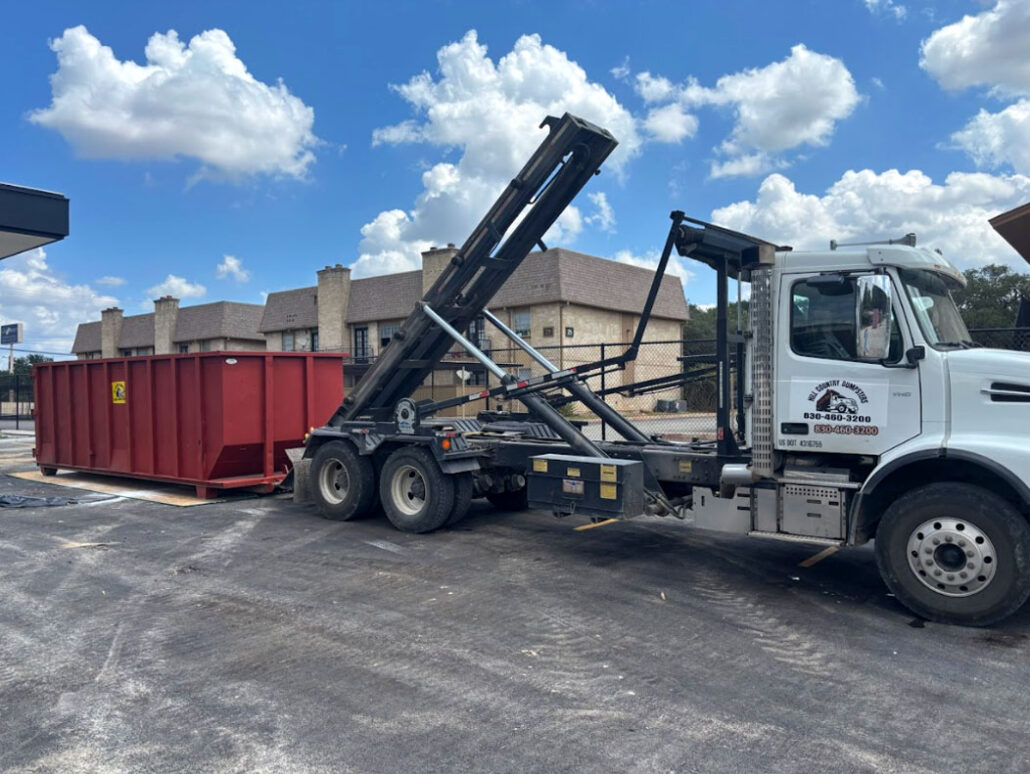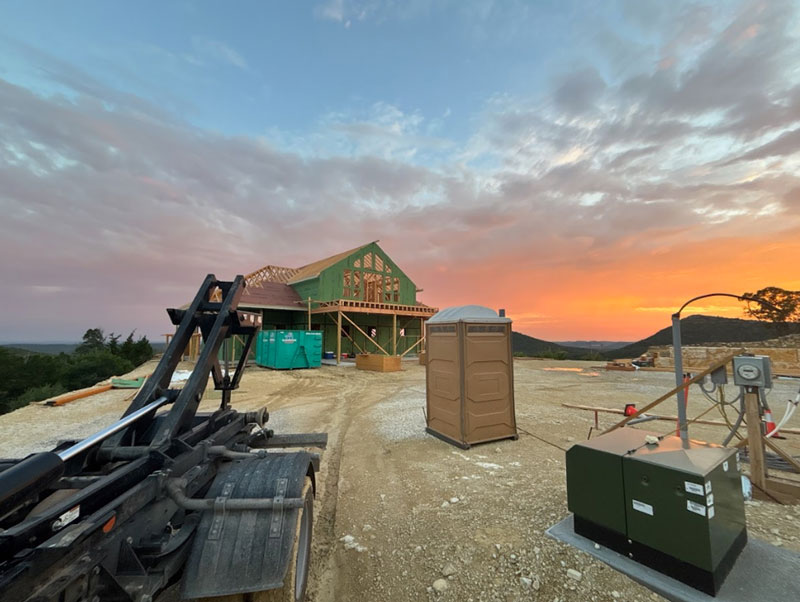
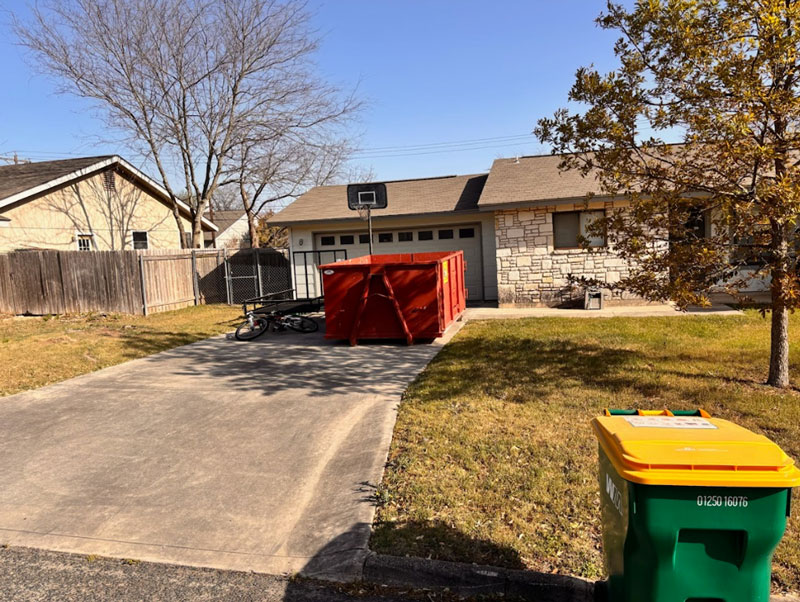
Prepare for the truck as well as the container. Share access details early, and keep the same route clear for collection.
Pick a spot with the whole project in mind
Look for a firm, level placement area that the crew can evaluate for the loaded container and truck. Balance a short debris-carrying route with access to the garage, home, and other deliveries. A convenient empty space is only useful if the truck can reach it safely.
Tell the crew about surface concerns before delivery: decorative paving, an older driveway, a narrow slab, gravel, or nearby landscaping. Ask what protection is appropriate for the actual surface and equipment. No placement method can promise that a surface will never be marked or damaged.
Walk the route from the road to the drop-off spot
On a property near Hunt, Ingram, Comfort, or another rural community, the street address may lead only to a gate. Send the gate location, directions to the work area, and a contact who knows the property. Provide access instructions directly to the crew; keep gate codes out of public posts.
Flag cattle guards, culverts, private bridges, tight turns, steep grades, low branches, and overhead lines. Tell the team about unpaved approaches and any section that becomes soft after rain. Let the driver assess suitability rather than assuming that a route a pickup uses will also work for a loaded roll-off truck.
Ask for the clearance this delivery needs
Container dimensions are a starting point, not a complete truck-access plan. Ask about the approach, unloading movement, overhead clearance, and turning space for the specific equipment. Photos from the street looking in and from the placement area looking out are useful.
Move vehicles, trailers, bins, and loose materials out of that route before the delivery window. Make sure the placement does not trap a vehicle or block doors, gates, shared access, or the next trade arriving at the site.
Resolve street and shared-space questions first
If the only possible spot is on a street, shoulder, sidewalk area, or other public space, contact the authority responsible for that location before arranging delivery. A postal city name does not necessarily identify who manages the road. Ask which department can confirm placement permission and any conditions.
For a rental home, shared drive, or neighborhood with an owners association, confirm the property owner’s and association’s requirements as well. Do not treat a neighbor’s past placement as approval for your project. Kerrville’s right-of-way management page is a starting contact for questions about public right-of-way there; it is not a blanket dumpster-placement authorization.
Agree on clear instructions for arrival
Give the team a placement description that works even if you are away: the driveway side, orientation, nearby landmarks, and a phone number answered during the window. Marking a proposed spot can help, but the driver still needs to approve it. Ask whether someone should be present for your particular delivery.
If weather, construction activity, or parked vehicles change the route, contact the crew before the truck leaves. A quick update gives everyone a chance to adjust the plan.
Protect the pickup route from day one
Keep the approach and collection area available throughout the rental. Avoid stacking building materials, parking a trailer, or scheduling another delivery where the truck will need to work. Ask the crew to handle any relocation rather than trying to move the dumpster yourself.
Before collection, confirm the pickup request, check the load against its limits, and clear access again. If the project needs an extension or exchange, contact the team while there is still room to plan it.
The day-before-delivery check
- Placement photos and access concerns shared with the crew
- Vehicles, gate access, and delivery contact arranged
- Street, property-owner, or association questions resolved
- Weather and surface conditions checked with the team
- Pickup route and intended collection date planned
Local programs, accepted materials, and rental terms can change. Confirm the requirements for your address, material, and rental before loading or making a disposal trip.